Seeds of Collective Change brings students together who think outside the box.
A group of George Brown Polytechnic (GBP) students are working to get their peers thinking differently about where their food comes from and how everyday food choices can affect the environment.
Seeds of Collective Change, a Student Association supported club, focuses on building a more sustainable and equitable food system at GBP.
The club grew out of work the students did along with their food studies cohort, to achieve the bronze fair trade campus certification from Fairtrade Canada.
The designation recognizes an institution’s commitment to ethical sourcing and educating students about where their food comes from. It also provides a framework for making fair-trade practices part of the college’s food system.
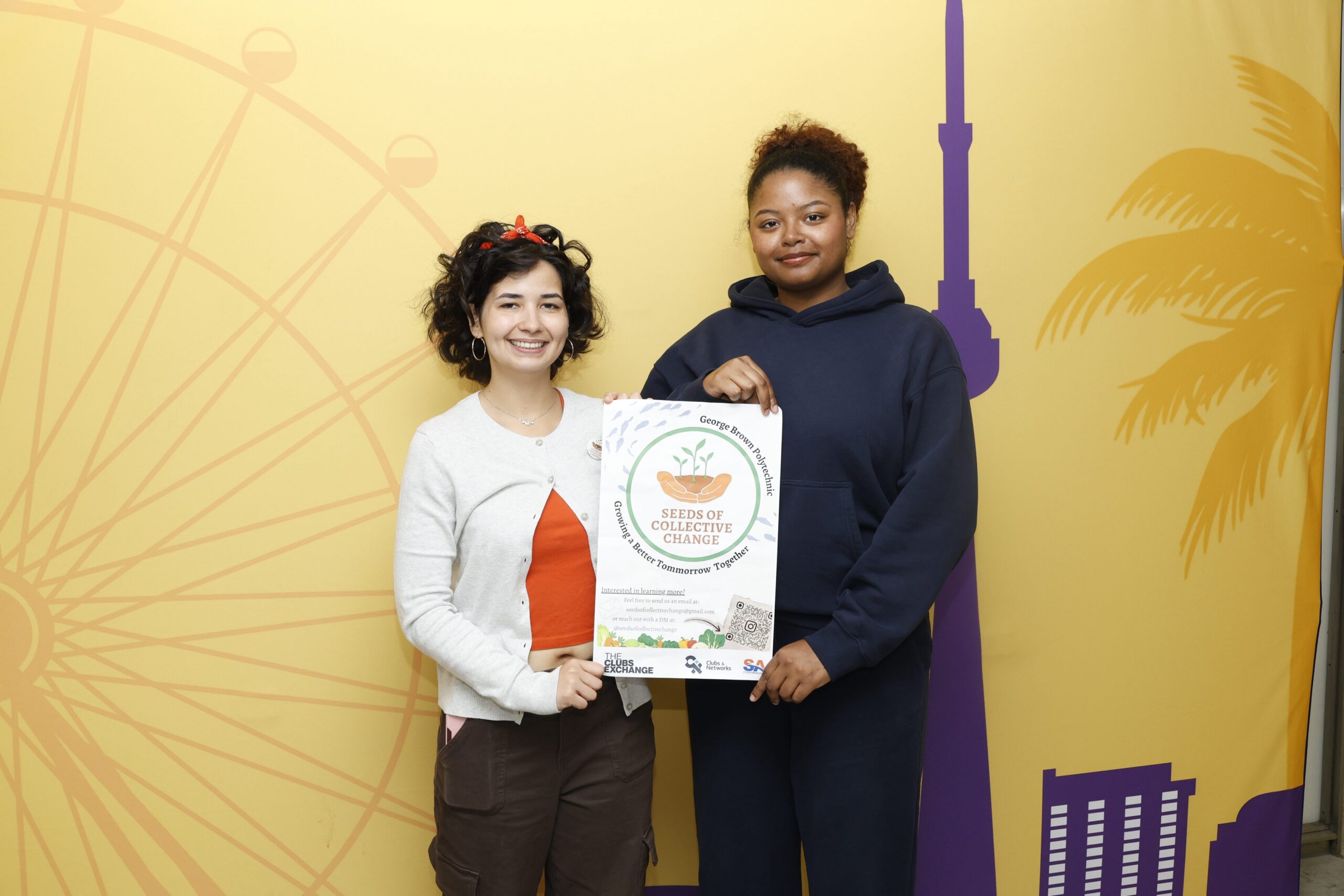
“Our vision is just a more sustainable and just an equitable food system for George Brown as a whole, and to make sure that our students are an integral part of that,” said Alex Mitchell, co-founder of the club.

After completing the work with Fairtrade, they decided they want to continue working on food sustainability at the college.
“We can’t stop now. We want to keep making changes and keep making George Brown community a better place for everybody,” Mitchell said.
Since then, the club has raised $400 for Community Fridges Toronto, connected with students through tabling events, making sure students are informed and aware of what’s going on in their food system and how they can make an impact.
Now, the club is expanding its work through a partnership with Ocean Wise.
The partnership came through a grant that the students applied for after being connected with an Ocean Wise representative through their food studies program.
With the grant, the club has planned two major events for this semester, an arts and crafts session and a sustainable cooking competition.
The art sessions, planned for each of GBP campuses in partnership with the college’s sustainability office, will use recycled plastic materials to create artwork. The sessions will also encourage students to discuss climate anxiety and explore ways they can contribute to environmental change.
The cooking competition will take place on Dec. 1 from 12 to 1 p.m. in the atrium of 300 Adelaide St.
Five teams of two students will create sustainable dishes while considering factors such as ingredient sourcing, seasonality and how food scraps can be reused.
For the organizers, however, the events are about more than prizes.
“We really want to start that conversation about sustainability and food systems, and specifically seafood,” Kaili Garraway, senior executive & co-founder, said.
Students can follow Seeds of Collective Change on Instagram for event updates and registration information.
They can also contact the club through direct message or email at seedsofcollectivechange@gmail.com.
Mitchell and Garraway also encourage students to bring their own ideas to the club. With access to funding, resources and connections, the group hopes to help students turn those ideas into action.