
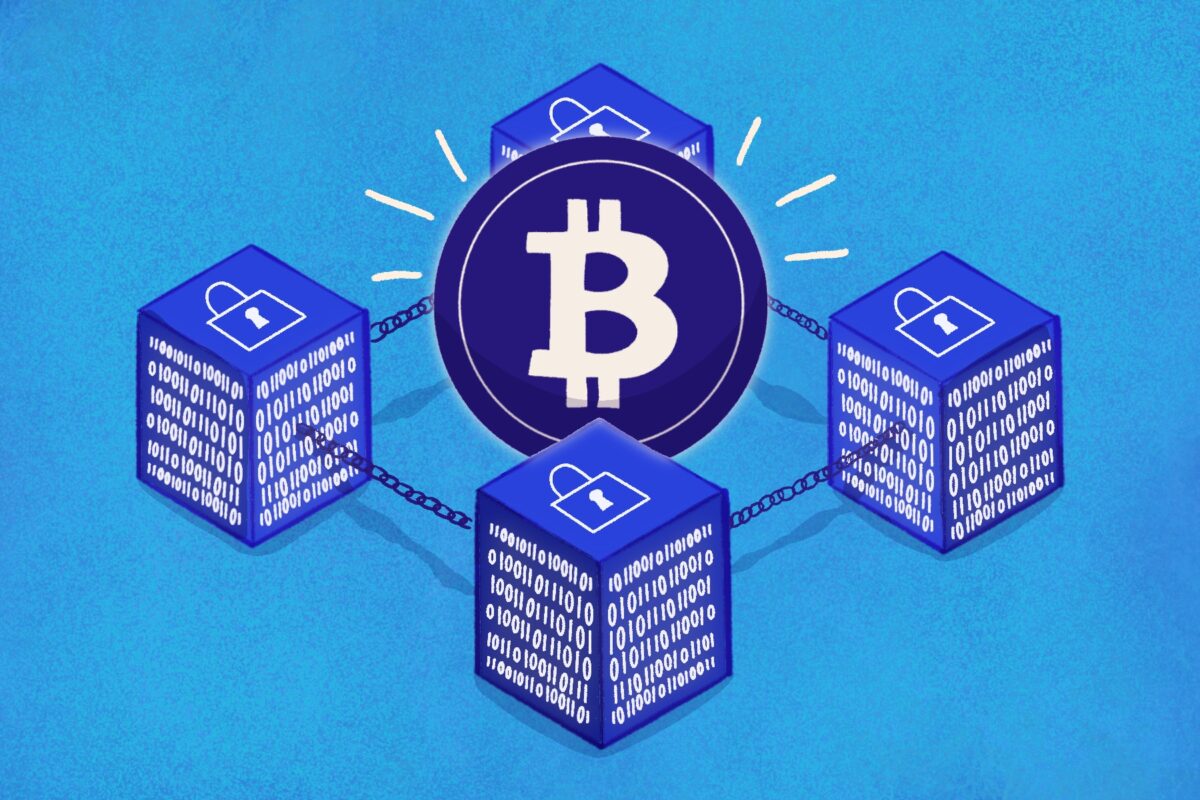
Bitcoin, the first of many cryptocurrencies, saw prices rise to all-time highs. The valuation climbed to more than $100,000 USD in January 2025. The growth it saw was mainly due to it being the first cryptocurrency with access to untapped markets, leading to what is now a large community backing it.
Bitcoin has attracted the investments of large corporations, institutions, and even governments of nations; the United States being the latest of many. While the monetary value of cryptocurrency certainly is enticing, the technology foundation on which it is built on, “blockchain” has far more potential than just cryptocurrency.
Blockchain was first outlined in 1991 by Stuart Haber and W.Scott Stornetta, researchers who wanted to implement a system where document timestamps were tamperproof. It is the formation of digital information in blocks stored across a network of computers which forms a database.
When transactions take place, the information about this transaction is stored within blocks, once the blocks are full, they are added to the chain linked together by cryptography.
By its nature, blockchain acts as a digital, decentralized public ledger open to everyone on the network. It makes any data stored on it immutable or unchangeable. Making data handling and storage secure and safe in this manner reduces the dependency on trusted third parties like auditors.
Different types of information can be stored on a blockchain, but the most popular is transaction information making the blockchain network a transaction ledger. Bitcoin makes use of blockchain to maintain a fully transparent record of payments and transactions.
While the transactions are transparent, the records are encrypted. So, anyone could track a Bitcoin wherever it goes, however, when Bitcoin ends up in a wallet, only the owner assigned the wallet address can reveal their own identity. This is what makes Bitcoin so attractive to criminals.
Some might wonder, how secure is the blockchain?
It differs by the code that creates the blockchain, any flaw in the code could lead to vulnerabilities in the whole chain. When it comes to the actual blockchain, every time new blocks are added to the chain, the previous blocks cannot be altered.
The new blocks are susceptible to being targeted by attackers. However, this would require immense computational power, almost half of the network. Attacking large blockchain networks like that of Bitcoin becomes nearly impossible because of this. Smaller networks may not be as reliable as larger networks.
As previously mentioned, blockchain has other uses besides creating digital currency, such as in maintaining property records, smart contracts, supply chains, voting and many more similar projects.
Smart contracts could be a more robust way of handling deals and negotiations, where the smart contract makes the transaction only when prearranged conditions have been met on both ends.
Using blockchain in supply chain logistics could improve tracking of products.
The food industry is one area that has seen a growing number of blockchain implementations. One such application is to track food transport paths and track sources of outbreaks of diseases food like Salmonella, E. coli, listeria, etc.
Blockchain is considered a disruptive technology, with its large application potential.
There are still a few drawbacks that still hold it back. These include the technology cost and energy cost to run the computational resources. Speed and data storage is limited for large networks with small block sizes.
Lack of regulation and use for illegal activities also paint a bad picture for blockchain. That goes without saying the many new cryptocurrencies that pop up every day and end up being something very similar to pyramid schemes where the owner and initial investors end up taking all the money commonly called a “rug pull”.
New developments to remove these limitations and improve blockchain are continuously ongoing and it’s not long before everyone interacts with blockchain in one way or the other. It can be a way to create a more secure, accurate, efficient system with less dependency on third parties.
