Jimmy Kim has been a boxing coach for more than 15 years.
But it wasn’t until he trained a woman with Parkinson’s that he saw how boxing could do more than build muscles, it could actually build hope.
“I’ve been training boxers for over 15 years,” Kim says. “And a few years back I started working one-on-one with a woman who had Parkinson’s. Her neurologist actually recommended boxing to help manage her symptoms. Over the course of two years, I got to see her grow stronger, more confident, and more mobile. It was honestly one of the most inspiring things I’ve witnessed as a coach.”
That experience changed the way he thought about boxing. It also changed his life.
“I’ve always loved boxing, but that experience opened my eyes to how powerful it can be beyond just sport or fitness. It made me realize I could use what I know to actually help people in a completely different way.”
Kim is now a certified Rock Steady Boxing coach. He runs weekly non-contact boxing classes at his gym, Jimmy’s Athletics, where people with Parkinson’s disease come to move, connect, and feel stronger.
“Boxing checks a lot of boxes when it comes to Parkinson’s. It works on footwork, balance, coordination, timing, rhythm, and reaction, basically all the areas the disease tries to take away.”
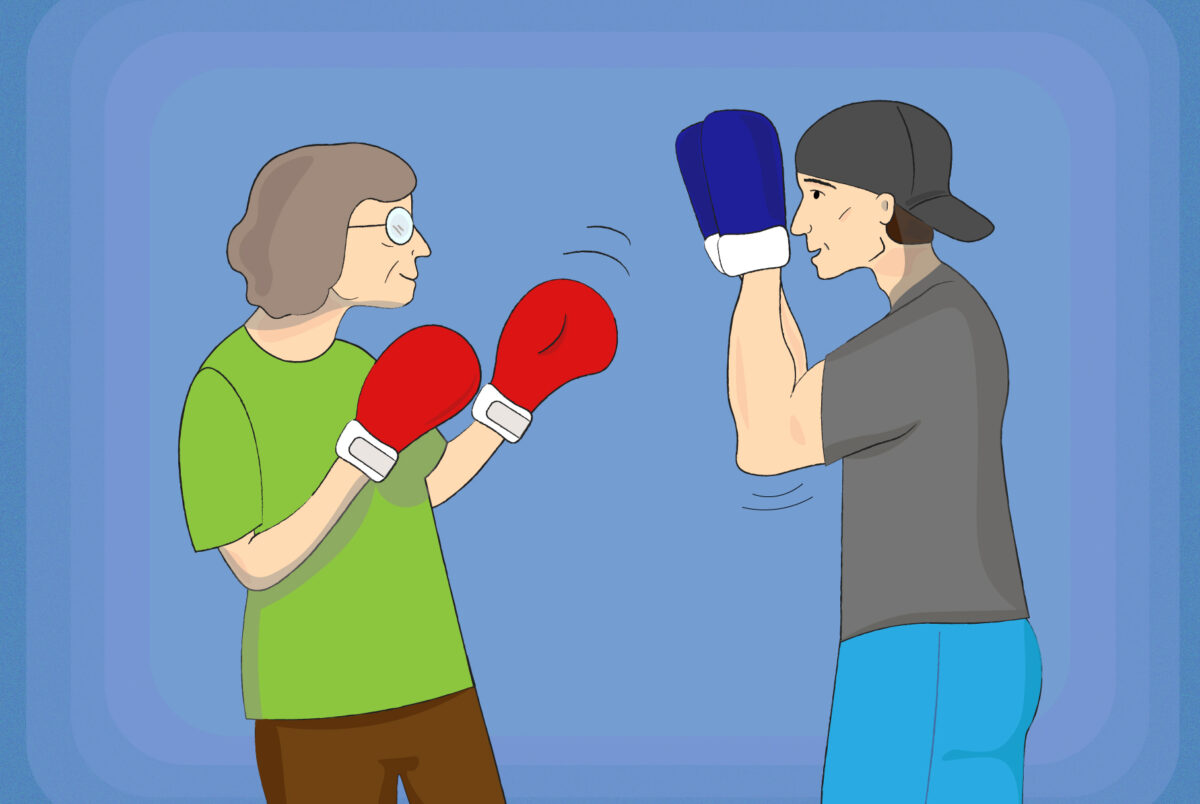
While the classes include boxing drills, they’re not about fighting in the ring. They’re about movement, dynamic, engaging, and it is tailored to each participant.
“Compared to something like walking on a treadmill or riding a stationary bike, boxing is way more dynamic,” Kim says. “You’re constantly switching things up. It’s more engaging, and that makes a difference.”
There’s also something deeper that happens when people show up to train.
“You’re not just going through the motions; you’re actively fighting back. It boosts confidence, focus, and even helps with posture and mental clarity.”
For many, it’s the emotional changes that hit the hardest.
“A lot of folks come in hesitant. They don’t want to be around other people with Parkinson’s. It’s scary, and it makes the diagnosis feel more real. I get that,” Kim says.
“But something amazing happens once they’re in the room. They see others working hard, laughing, giving it their all, and that hesitation just melts away. Within minutes, they’re part of it.”
That sense of belonging is what keeps people coming back.
“Community is everything. Parkinson’s can be incredibly isolating physically, emotionally and socially. But when you’re in a class where people understand exactly what you’re going through, there’s a real sense of connection. You’re not doing this alone.”
Classes take place Wednesdays at 11:45 a.m. at Jimmy’s Athletics, 590 Bloor Street West. More details and sign-ups are available on the gym’s website.